Surge Protection Upgrades
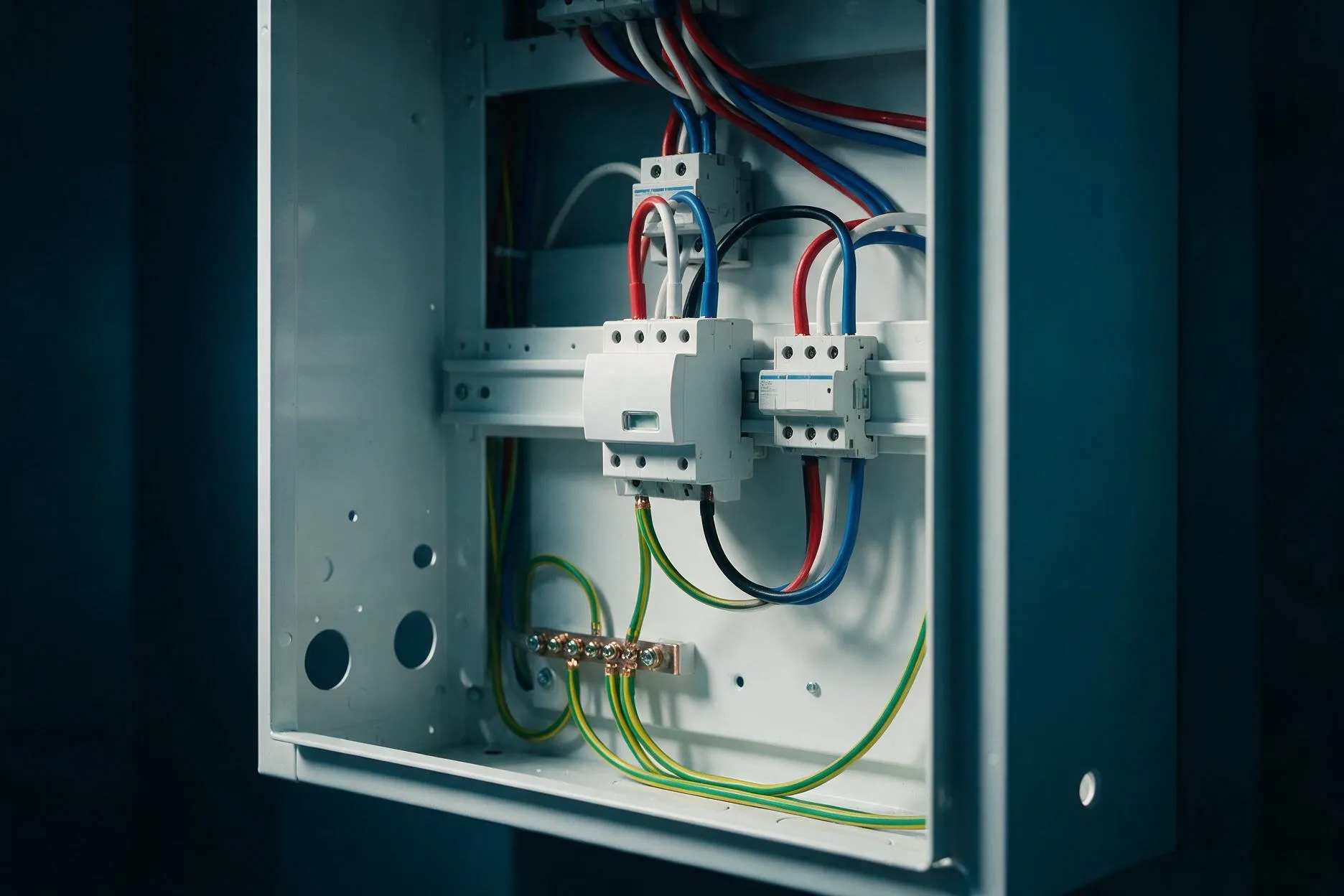
Far North Queensland storm season sends voltage spikes through the grid that can fry equipment in microseconds. A surge protection device fitted at the board clamps the spike and diverts it to earth before it reaches your gear.
Surges cost more than the SPD ever would
A power surge is a spike well above the normal 230V — anywhere from a few hundred to thousands of volts, lasting microseconds but carrying enough energy to fry electronics. Up here the big cause is lightning and storm activity, but surges also come from grid switching and large motors starting and stopping on site. For a business, that means equipment loss, data loss, and downtime.
AS/NZS 3000 says it's often mandatory
Under the Wiring Rules (AS/NZS 3000, Appendix F), surge protection is mandatory where a building has a lightning protection system, and recommended wherever you've got overhead supply, high lightning risk, a remote location, or sensitive equipment. In storm-prone Far North Queensland, most commercial sites tick at least one of those boxes.
Type 1, 2 & 3 SPDs — how they work together
A plug-in power board only protects whatever's plugged into it, and only against small residual spikes. Real protection is layered — each stage catches what the last one didn't.
Type 1
Main switchboard
Big external hits — lightning strikes, grid faults
Type 2
Distribution board
Moderate surges from switching and grid fluctuation
Type 3
Point of use / equipment
Whatever gets through to your most sensitive gear
Surge protection, installed — no surprises
Priced by your supply, not a site visit. Covers the SPD unit and fitting at your switchboard — if the inspection turns up board work needed to fit it safely, we'll quote that separately before doing anything.
Single phase
$499
SPD unit + fitting
Three phase
$999
SPD unit + fitting
Excludes any switchboard repairs or upgrades found to be needed — quoted separately, and only with your approval.
Who needs it
Commercial premises with sensitive equipment — comms rooms, server racks, EFTPOS and point-of-sale systems, refrigeration control boards, machinery with electronic controllers. If downtime or data loss would hurt your business, an SPD at the board is cheap insurance against it.
Do they wear out?
Yes — SPDs degrade a little each time they absorb a surge, and eventually they're spent. Good ones have a status window that shows green while healthy and red when they need replacing, and many use replaceable cartridges so you swap the module, not the whole unit. They should be checked as part of routine testing and replaced after any major surge event.
It has to go in at the board — and it has to be licensed.
DIY surge protection breaches electrical safety law and voids the warranty. We size it to your supply and site, fit it properly, and certify the install.
Related services
SPDs — common questions
What is a power surge, and what causes it?
A power surge is a sudden spike in voltage well above the normal 230V — anywhere from a few hundred to thousands of volts, lasting only microseconds but carrying enough energy to fry electronics. Up here in the Far North the big cause is lightning and storm activity, but surges also come from the grid switching and from large motors starting and stopping on site.
What is a surge protection device (SPD)?
An SPD is a device fitted in your switchboard that clamps voltage spikes and diverts the excess safely to earth before it reaches your equipment. Think of it as a pressure-relief valve for your electrical system — it takes the hit so your machinery, computers and data gear don't.
Do I need surge protection, or is it required?
For commercial premises it's strongly recommended, and in some cases required. Under the Wiring Rules (AS/NZS 3000, Appendix F), surge protection is mandatory where a building has a lightning protection system, and recommended where you've got overhead supply, high lightning risk, a remote location, or sensitive equipment. In storm-prone Far North Queensland, most commercial sites tick at least one of those boxes.
Isn't a plug-in power board with surge protection enough?
No — a plug-in board only protects whatever's plugged into it, and only against small residual spikes. Real protection is layered: a Type 1/2 SPD at the switchboard catches the big surges as they come in, and point-of-use protectors mop up anything that gets through to your most sensitive gear. The switchboard device is the one that does the heavy lifting.
What are Type 1, Type 2 and Type 3 SPDs?
They're stages of defence. Type 1 goes at the main switchboard and handles the big external hits like lightning and grid faults. Type 2 sits at the distribution board and handles moderate surges from switching. Type 3 is the plug-in, point-of-use protection at the equipment itself. A proper setup combines them so nothing gets through unprotected.
Do surge protectors wear out?
Yes — SPDs degrade a little each time they absorb a surge, and eventually they're spent. Good ones have a status window that shows green while they're healthy and red when they need replacing, and many use replaceable cartridges so you swap the module, not the whole unit. They should be checked as part of routine testing and replaced after any major surge event.
Can I install surge protection myself?
No — it's switchboard work, so it must be done by a licensed electrician. DIY installation breaches the electrical safety laws in every state, voids the product warranty, and if it's not coordinated properly it won't actually protect you. We size it to your supply and site and certify the install.
Protect your equipment before storm season
Fixed pricing by phase — tell us your supply and we'll get you booked in.
- Single phase $499 · Three phase $999
- Booked in as soon as we can fit you in
- Certificate provided on completion
Three things I put in writing
Every quote you get from an electrician looks the same from the outside. Here's what's different about this one — and none of it depends on anyone but me.
The Fixed Price Promise
One fixed price for the work that needs doing.
I check the job properly before quoting, so the price covers everything it needs — no surprises on the day. If I find extra work once I'm there, I'll tell you and price it separately before doing it. You're never billed for something you didn't agree to first.
The On-Time Promise
Inside the booked window, or $50 off the job.
You get a booked window, not a vague day. If I'm not there inside it, I take $50 off the job. No excuses and nothing for you to chase.
Lifetime Workmanship Warranty
If it fails because of how I fitted it, I fix it free.
Every install is backed for as long as you own the place. If something I fitted fails because of the workmanship — not a storm event, not a manufacturer fault — I come back and make it right at no charge.