Electricians who tell you the price before they start.
Based at Trinity Beach and working across Palm Cove, Smithfield, Kewarra Beach and the Cairns Northern Beaches. A fault, a fan, a safety check or a rental that needs to be compliant: we look at it and quote on the spot.
- Quote on the spot
- Fixed price before work starts
- Rated 4.9 on Google
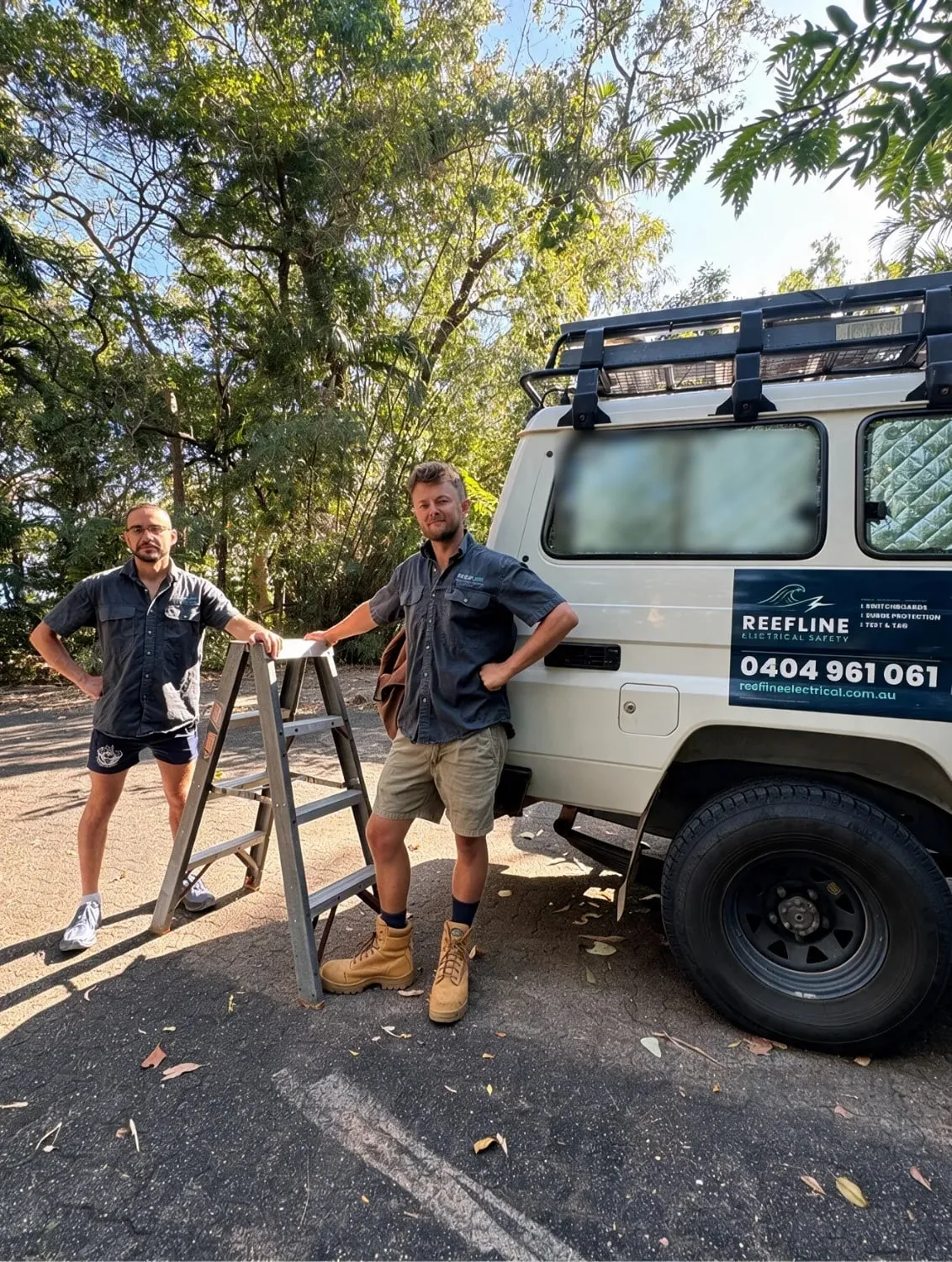
Electricians for homes, rentals, strata and business
One licensed team across the Cairns Northern Beaches. You get a fixed price on the spot, and nothing starts until you've said yes.
Homeowners
Faults, ceiling fans, lights, power points, smoke alarms and safety switches. We explain what's wrong in plain English and quote on the spot.
Get a quoteReal estate agents & property managers
Reliable turnaround on maintenance requests, plus safety and compliance work on rentals — smoke alarms, safety switches and clear paperwork for your files.
Send us a jobStrata & body corporates
Common-property electrical work, fault finding and test and tag, with the records your committee and strata manager need.
Strata servicesLocal businesses
Test and tag, safety switch testing and compliance records for shops, offices, workshops and commercial sites.
Test & tagQuote on the spot — a fixed price before any work starts
Booked in as soon as we can fit you in
Certificates and paperwork supplied on completion
“Ryan communicated closely with us on a very extensive, complicated major switchboard upgrade, and managed all of the Ergon communications and work requests. He went over and above expectations throughout.”
“Ryan came out and installed whole-home surge protection directly at the switchboard. He was great to deal with, explained how everything worked, and got the job done quickly and professionally.”
“Ryan completed a full re-wiring of our old farm house. He accommodated our short notice and last minute changes with grace. His work is neat, clean and on time, with wonderful results.”
What we get called out for
- Faults & repairs
- Power points
- Ceiling fans
- Lights & LED downlights
- Smoke alarms
- Safety switches (RCDs)
- Switchboard upgrades
- Surge protection
- Test & tag
Not on the list? Call 0404 961 061 — if it's electrical, ask.
Four steps, no surprises
Call or message
Tell us what's going on. We book a time that suits you — home, rental, strata or business.
Quote on the spot
We look at the job and give you a fixed price there and then — no waiting days for an emailed quote.
You say yes
Nothing starts until you've agreed the price. If extra work turns up, we tell you and price it first.
Done and documented
Work is tested and certified, paperwork supplied where it's required, and you know exactly what was done.
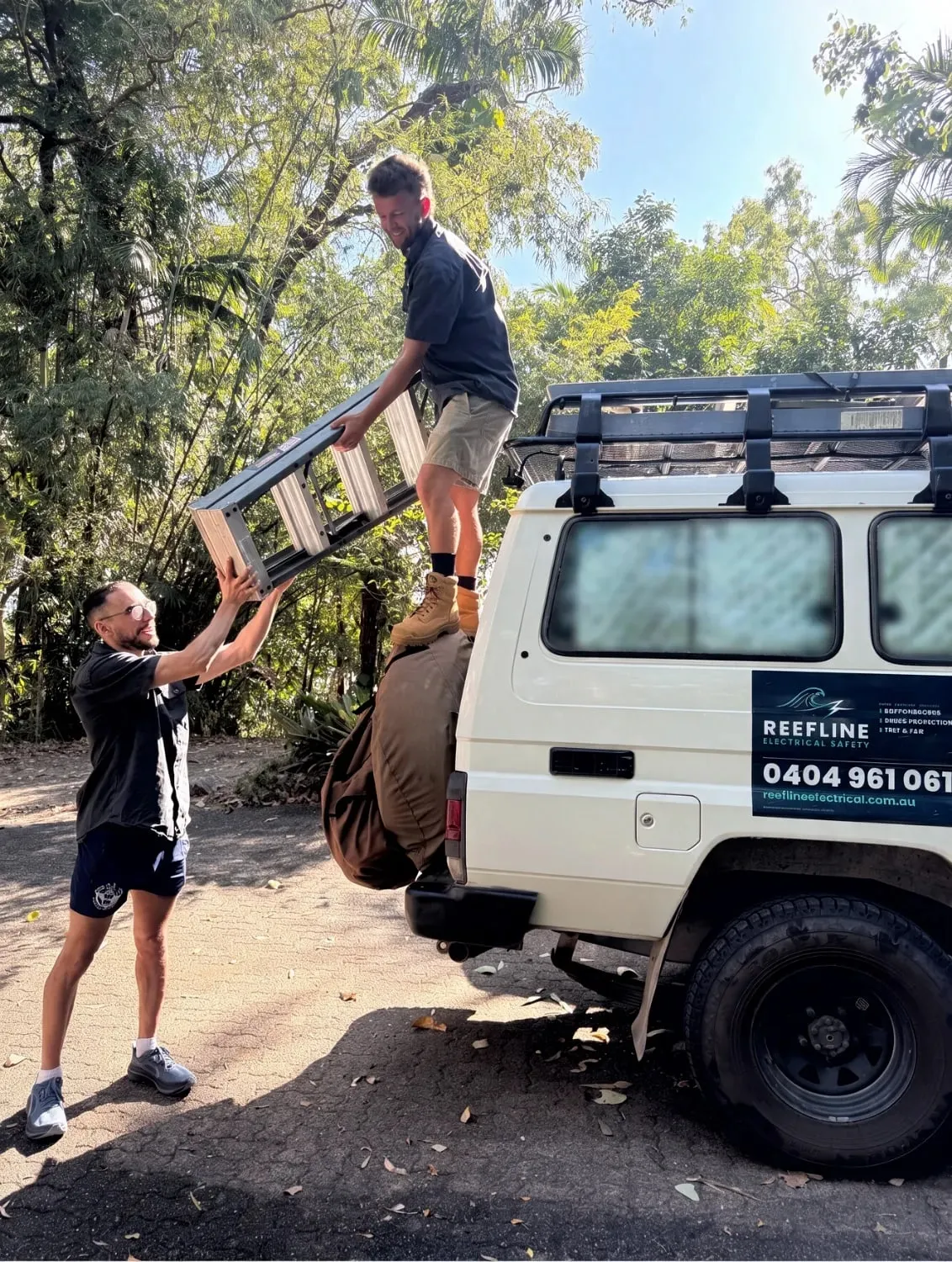
Your electricians. Easy to deal with.
We live and work on the Cairns Northern Beaches. Call or send a message and we'll come back to you. We turn up in the ute, look at the job and tell you the price on the spot.
No jargon and no surprises. If we find more work once we start, we tell you first.
Three things I put in writing
Every quote you get from an electrician looks the same from the outside. Here's what's different about this one — and none of it depends on anyone but me.
The Fixed Price Promise
One fixed price for the work that needs doing.
I check the job properly before quoting, so the price covers everything it needs — no surprises on the day. If I find extra work once I'm there, I'll tell you and price it separately before doing it. You're never billed for something you didn't agree to first.
The On-Time Promise
Inside the booked window, or $50 off the job.
You get a booked window, not a vague day. If I'm not there inside it, I take $50 off the job. No excuses and nothing for you to chase.
Lifetime Workmanship Warranty
If it fails because of how I fitted it, I fix it free.
Every install is backed for as long as you own the place. If something I fitted fails because of the workmanship — not a storm event, not a manufacturer fault — I come back and make it right at no charge.
Everyday electrical work, and specialist safety services
Repairs, power points, lights, fans and smoke alarms, plus switchboards, surge protection and testing. Marine and strata clients get their own tailored approach.
Electrical Repairs & Fault Finding
Power out, tripping switches, flickering lights. We find the fault, explain it plainly and quote on the spot.
Learn morePower Points
New power points where you need them, and faulty or damaged ones fixed. Quote on the spot.
Learn moreLights & Downlights
Light fittings replaced and repaired, and hot halogen downlights swapped for LED.
Learn moreCeiling Fans
Ceiling fans fitted or replaced. Old, noisy or wobbly fan? We'll sort it and tell you the price on the spot.
Learn moreSmoke Alarms
Linked photoelectric smoke alarms checked, replaced and fitted. Queensland homes need them by 1 January 2027.
Learn moreSwitchboard upgrades
Replace an old ceramic-fuse board with a modern, safe switchboard built for your home.
Learn moreSurge protection
Protect your appliances and electronics from storm surges. Fitted at the switchboard.
Learn moreSafety switch (RCD) testing
Check your safety switches trip fast enough. For homes, rentals and businesses.
Learn moreTest & tag
Testing and tagging for businesses, with a certificate and asset register on every job.
Learn moreWhat could a storm break in your home?
Tick how many of each thing you have. We'll show you what it would all cost to replace — and the price to protect it.
Press + for each one you have at home. Wired-in things count too — aircon, oven, hot water.
TVs
~$400–$1,500 each
Air conditioners
~$1,200–$3,500 each
Computers & laptops
~$600–$2,500 each
Fridges
~$800–$2,800 each
Other appliances
Anything big we haven't listed — washing machine, dryer, home theatre, whatever
Smart home devices
Cameras, doorbells, hubs, speakers — anything plugged in and connected
What a storm could break
$0
Sources: Bureau of Meteorology lightning density mapping, Cairns Post. Home insurance often only covers surge damage under specific policy conditions — worth checking yours.
Your estimated value at risk
$0
Your fixed price to protect all of it is in your instant quote below.
Is your switchboard single-phase or three-phase?
Not sure? Most homes are single-phase — we'll confirm on the day either way.
Check your inbox.
Your quote is on its way — we'll follow up shortly to lock in a time.
0+
Years in the trade
0's
Items tested & tagged
Covering the Cairns Northern Beaches
Based in Trinity Beach, working right along the coast — plus greater Cairns and marine work extending to the Whitsundays.
- Trinity Beach
- Palm Cove
- Clifton Beach
- Kewarra Beach
- Smithfield
- Yorkeys Knob
- Holloways & Machans Beach
- Trinity Park
- Edge Hill
- Whitfield
- Freshwater
- Brinsmead
- Bayview Heights
- Redlynch
$50 off for you, $50 off for them
For every mate you refer — no limit. Just have them mention your name when booking.
Frequently asked questions
What does "quote on the spot" mean?
We look at the job, work out what it needs and give you a fixed price on the same visit, so you're not waiting days for an emailed quote. Most everyday jobs can be priced this way. If something is bigger and needs a closer look first, we'll tell you straight away rather than guess.
What if you find extra work once you've started?
We stop and tell you, then price it separately before doing it. You're never billed for something you didn't agree to first.
What electrical jobs do you do around the home?
Faults and repairs, power points and lighting, ceiling fans, LED downlights, smoke alarms, safety switches, switchboard upgrades and surge protection. If it's electrical, ask.
Do you work with real estate agents and property managers?
Yes. We handle maintenance requests and safety work on rental properties, such as repairs, smoke alarms and safety switches, and give you clear paperwork for your records. Call or send the job through and we'll come back with a price.
Do you do strata and body corporate work?
Yes. Common-property electrical work, fault finding and test and tag, with the records your committee and strata manager need.
What areas do you service?
We're based in Trinity Beach and cover the Cairns Northern Beaches — Palm Cove, Clifton Beach, Kewarra Beach, Smithfield, Yorkeys Knob, Holloways Beach, Machans Beach and Trinity Park — plus greater Cairns, with marine work extending to the Whitsundays.
How do I know if my switchboard needs upgrading?
The clearest signs are old ceramic (rewireable) fuses, no safety switches, breakers that trip often, lights that flicker or dim when big equipment kicks in, a warm board, or any burning smell. If you're adding load — more machinery, aircon, solar or EV charging — an older board often can't handle it safely either.
Do I need surge protection, or is it required?
For commercial premises it's strongly recommended, and in some cases required. Under the Wiring Rules (AS/NZS 3000, Appendix F), surge protection is mandatory where a building has a lightning protection system, and recommended where you've got overhead supply, high lightning risk, a remote location, or sensitive equipment. In storm-prone Far North Queensland, most commercial sites tick at least one of those boxes.
Is test and tag a legal requirement in Queensland?
For most workplaces, effectively yes. Queensland WHS law puts a duty of care on you to make sure electrical equipment is safe and maintained — and testing and tagging to AS/NZS 3760 is the recognised way to meet that duty. The law doesn't name a rigid schedule for every item, but if something goes wrong and you can't show your gear was maintained, that's on you.
Get a quote — usually on the spot
Tell us what you need and where you are. We'll call you back, and for most jobs we can give you a fixed price on the visit.
- Quote on the spot — a fixed price before any work starts
- Booked in as soon as we can fit you in
- Certificates and paperwork supplied on completion