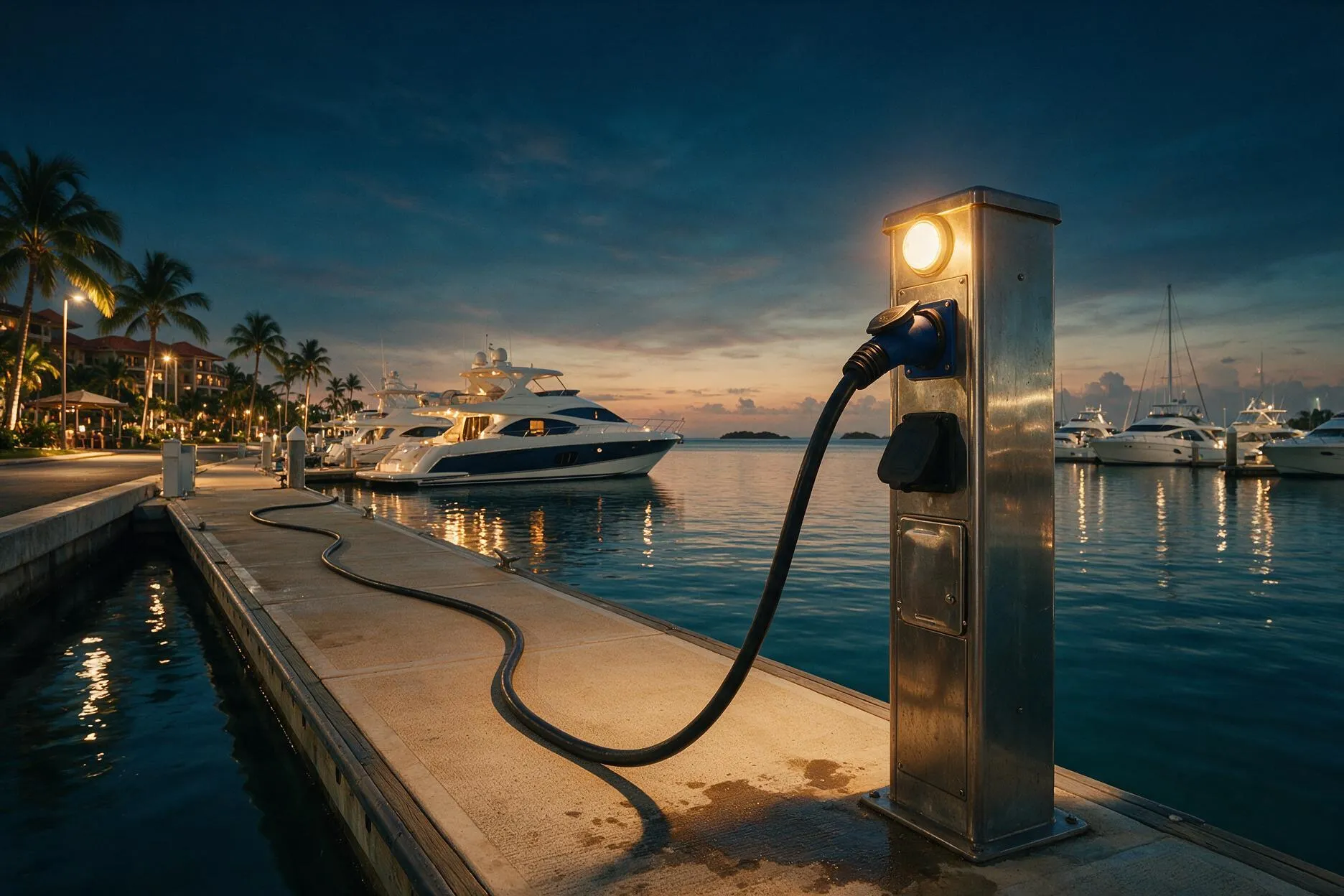
Marine Test & Tag
Salt air and moisture corrode terminals and perish insulation far faster than on land — marine gear is treated as a hostile environment under AS/NZS 3760, and shore power leads must be tested annually.
A harsher environment, a stricter schedule
Marine electrical gear lives in a salty, damp, corrosive environment that chews through cords and connections far faster than anything on land. There's also the corrosion risk from connecting to shore power, which is why boats use galvanic isolators or isolating transformers.
What covers marine electrical work
The marine standard is AS/NZS 3004 — Part 1 covers the marina side (berths and shore supply), Part 2 covers the boat's own electrical installation. General testing and tagging of leads and appliances still follows AS/NZS 3760.
Shore power leads — tested annually
- Tested and tagged every year under AS/NZS 3760
- Must not be longer than 25 metres
- Never run while still coiled — a coiled lead under load can overheat
Most marinas check this before they'll connect you to shore power.
Marina safety switches
RCDs feeding each berth need a push-button test every month and a full trip-time test at least once a year to AS/NZS 3760, with results recorded and kept for audit. Given how much water and salt these live around, that testing isn't a formality — it's what stops a fault becoming a fatality.
Can a marina refuse to connect you?
Yes — and they should if your gear isn't compliant. Marina operators can't safely or legally supply shore power to a vessel that doesn't meet the marine electrical standard, and most require a current shore-lead test tag before they'll switch you on. Getting it sorted keeps you connected and keeps everyone on the pontoon safe.
Stay connected, stay compliant.
We test shore-power leads, onboard gear and berth safety switches to AS/NZS 3760 and AS/NZS 3004 — covering the Cairns Northern Beaches through to the Whitsundays.
Related services
Marine electrical — common questions
Do boats and marinas need test and tag?
Yes. Marine electrical gear lives in a salty, damp, corrosive environment that chews through cords and connections far faster than anything on land, so it's treated as a "hostile environment" under AS/NZS 3760 and needs regular testing. Shore power leads in particular have to be tested and tagged every year.
What standard covers marine electrical work?
The marine standard is AS/NZS 3004 — Part 1 covers the marina side (the berths and shore supply) and Part 2 covers the boat's own electrical installation. General testing and tagging of leads and appliances still follows AS/NZS 3760. Marine work has its own rules around things like isolation and corrosion that ordinary domestic wiring doesn't.
How often do shore power leads need testing?
Every year. Under AS/NZS 3760 a shore power supply lead must be tested and tagged annually, must not be longer than 25 metres, and must never be run while it's still coiled up (a coiled lead under load can overheat). It's one of the most common things marinas check before they'll connect you.
Why is marine electrical different from a normal building?
Salt air and moisture. The marine environment corrodes terminals, perishes insulation and attacks earth connections much faster than a dry indoor site, so faults develop quicker and testing has to be more frequent. There's also the corrosion risk from connecting to shore power, which is why boats use galvanic isolators or isolating transformers.
Can a marina refuse to connect my boat to shore power?
Yes — and they should if your gear isn't compliant. Marina operators can't safely (or legally) supply shore power to a vessel that doesn't meet the marine electrical standard, and most require a current shore-lead test tag and compliant onboard wiring before they'll switch you on. Getting it sorted keeps you connected and keeps everyone on the pontoon safe.
What about the safety switches on the marina berths?
The RCDs feeding each berth need looking after too: a push-button test every month and a full trip-time test at least once a year to AS/NZS 3760, with the results recorded and kept for audit. Given how much water and salt these live around, that testing isn't a formality — it's what stops a fault becoming a fatality.
Book your marine test & tag
Tell us your vessel or marina and where you're berthed — we'll quote it fast.
- Quote on the spot — a fixed price before work starts
- Booked in as soon as we can fit you in
- Certificate + asset register within 24h of completion